The five power tools you’ll grab every time you start a project (plus what to look for before you buy)
Whether you’re painting, renovating, or just trying to stop calling a handyman every time something squeaks…these are the five game-changing, DIY power tools for beginners I swear by. If you’re looking for the five best power tools for beginners and what to know when you buy then read below.
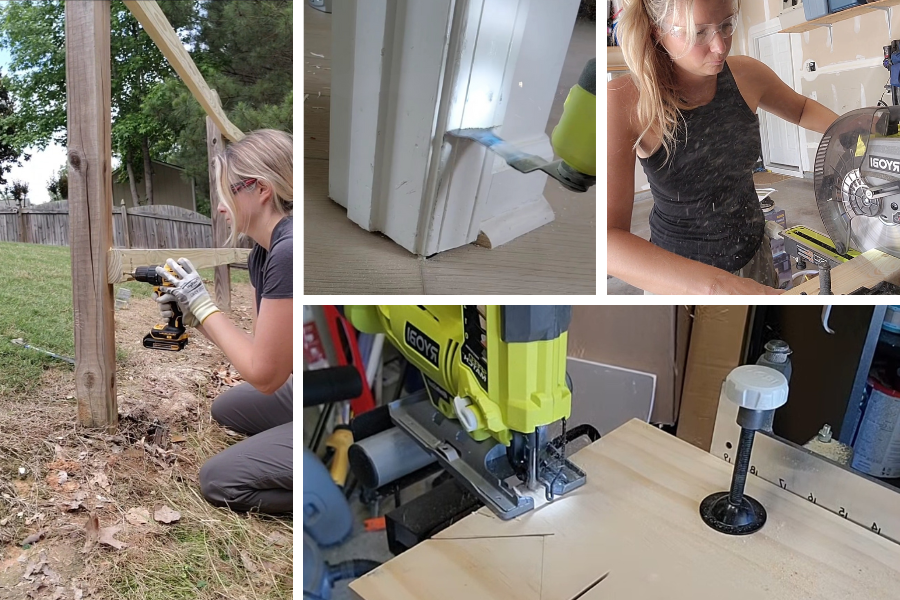
1. The Drill (Your #1 Must-Have)
Yeah, it seems obvious. But trust me: a solid drill is the foundation of any DIY homeowner’s toolkit. I put up with an old clunky one for years until I finally treated myself to a new one and I can’t believe the difference.
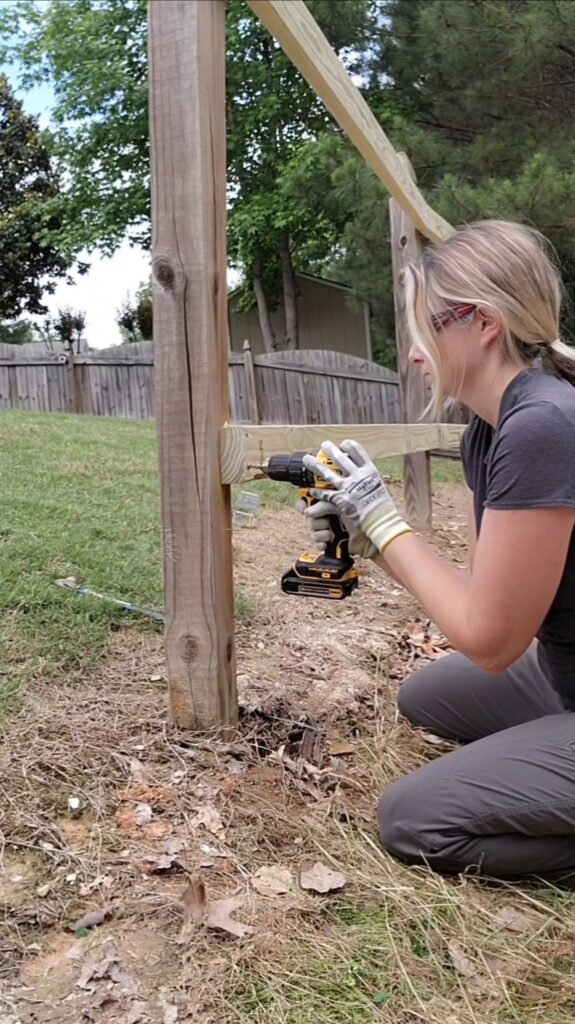
- Pick a cordless model with at least a 20V battery so you won’t struggle with big screws or anchors.
- Go for a brushless motor if you can. It lasts longer and runs cooler during big jobs.
- Since I live by the “one brand battery” rule if possible (more on that below), it’s good to start with a mid-tier drill from one brand and today all my other power tools share its battery.
- Tip: use 0% financing or a Black Friday deal to grab a top model now or a tool bundle!
This one is a great all-purpose: DEWALT drill link
This is a great set of two if you want an impact driver with more power AND a drill: SENIX set link
2. The Miter Saw (Step Up Big Time)
When you’re ready to level-up beyond hanging picture frames, a miter saw is your friend.
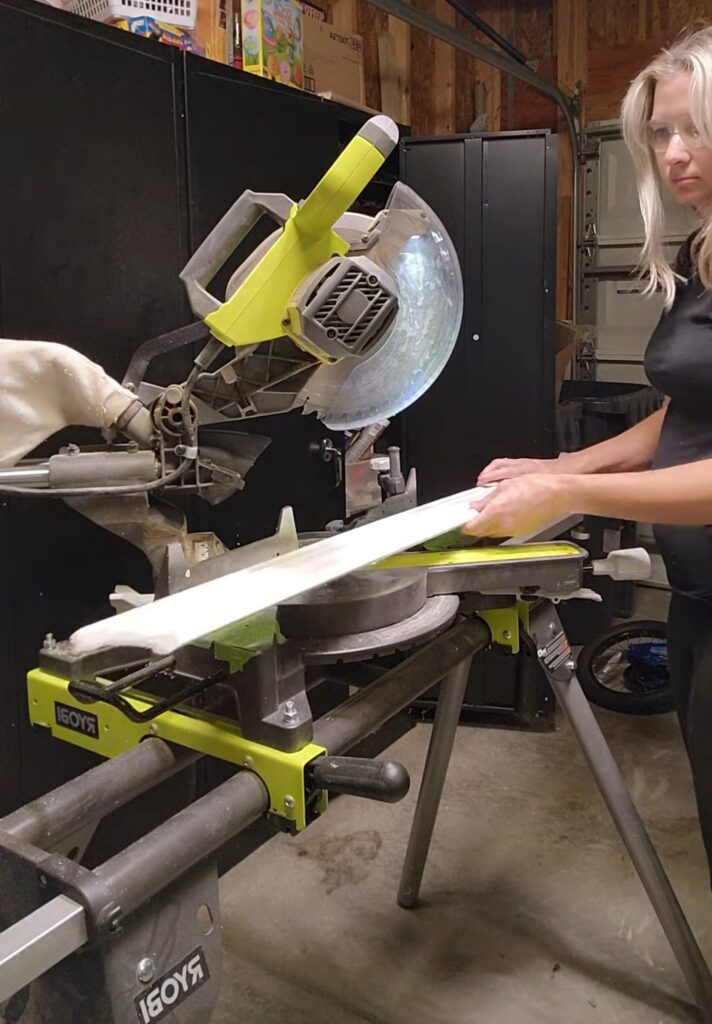
I recommend a 10″ or 12″ sliding-compound miter saw with a table or stand that extends for wide cuts (think baseboards, shelves, or wide lumber).
- Why sliding? Because the blade moves back and forth along a rail, letting you cut wider boards. Trust me, bigger is better here.
- Why table or stand? Many portable models are great, but a table adds stability and makes repeat cuts easier and safer. I have an expanding one from Ryobi that has been AMAZING. It tucks in when I’m not using it but can slide out to support long boards (think 8-12 ft 2x4s or 12 ft crown moulding)
- When you’re shopping: look for one with positive stop miter detents (for common angles) and a dust collection port (so you’re not buried in sawdust every time).
- Financing tip: Watch for end-of-year tool sales — you can often get this for 20-30% off if you time it right and use a 0% deal. No need to cough up the cash today when you can spread it out over 6-12 months!
This is the one I own: RYOBI Miter Saw and Stand
3. The Jigsaw (For Curves, Details & Free-form Cuts)
Once you have a saw that makes straight cuts, you’ll find yourself wanting to cut shapes, follow curves, make plunge cuts in the middle of a board… that’s when the jigsaw enters.
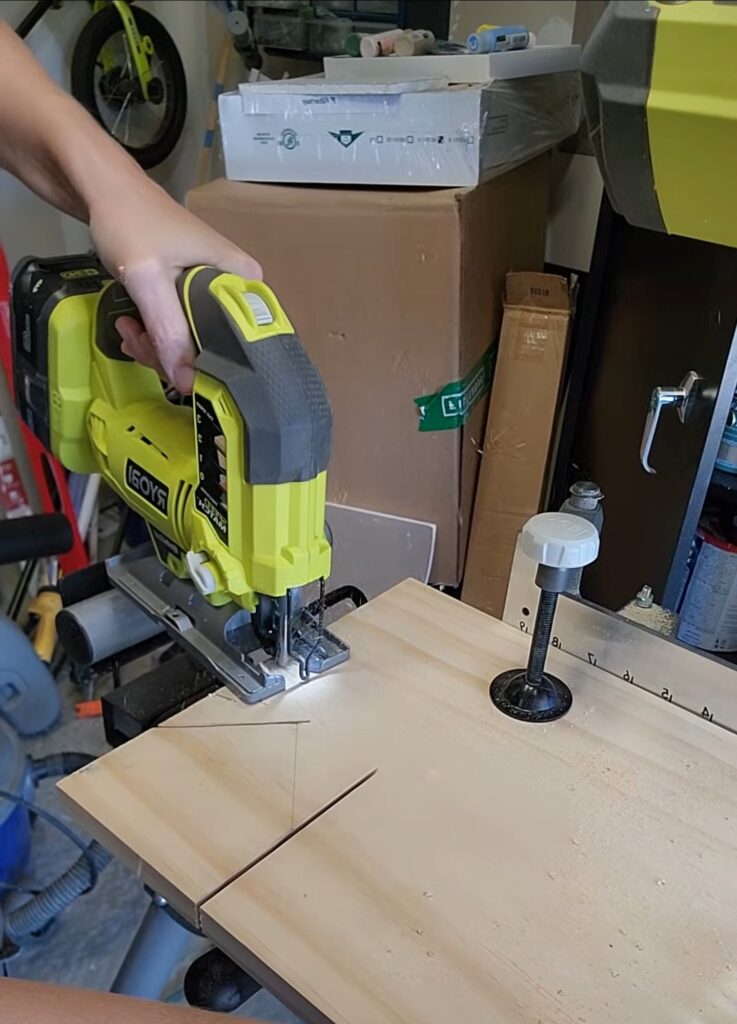
- Choose one with orbital settings (for faster rough cuts in wood) and variable speed (for cutting laminate, metal, or plastic with control).
- Make sure the blade change is fast (tool-less if possible) so you don’t waste time swapping blades when you move from wood to metal. Don’t be afraid to change out blades often. If you find the jigsaw isn’t running smooth and fast…it’s time to swap it out!
- Quality blade sets matter: buy good ones and keep them sharp. Cheap blades = frustrating finish.
- This is a smaller investment than a miter saw, so it’s a good one to grab during a flash sale or 0% financing window.
*I went with RYOBI again because I got it on sale and already had the batteries for it! Once you have two brand batteries in your possession, you’ll find it’s MUCH cheaper to buy “tool-only” without the battery.
This is the one I’ve been using for YEARS and it still works great: RYOBI Jigsaw
4. The Oscillating Multi-Tool (Your Under-The-Radar Hero)
If you only buy four, make this one your stealth upgrade.
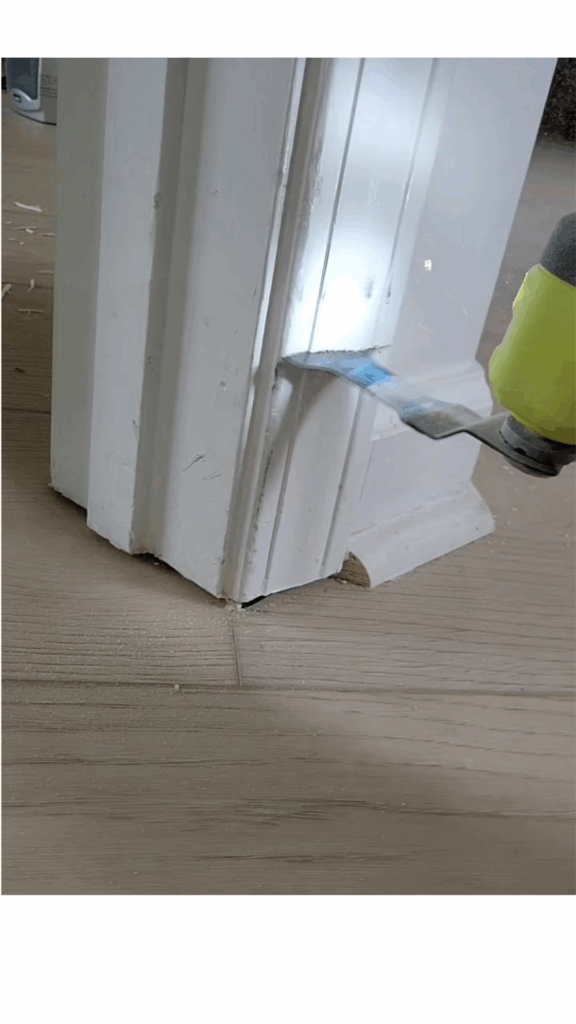
- Why it matters: This tool can cut metal, trim, drywall, wood, tile…whatever small fix or intricate job you didn’t plan for but ends up haunting your weekend.
- Key features to look for: tool-less blade change, a universal accessory adapter, and multiple speeds for fine work vs heavy demolition.
- Use cases: trimming door jambs, cutting out damaged drywall, removing old tile, flush-cutting nails, sanding in corners…this thing saves your back, your nerves, and sometimes your wallet.
- Once you’re comfortable with your drill + miter saw + jigsaw, this is the one that turns “okay I can handle this” into “I got this”.
This is the one I own and hasn’t let me down yet: RYOBI Oscillating Link
5. The Brad Nail Gun (Nice-to-Have, Not Critical)
If you’re serious about finish work like trim, crown moulding, cabinetry then yes…it’s incredibly nice to have a brad nail gun. You can accomplish A LOT with just a hammer and 16-gauge brad nails but this is DEFINITELY nice to grab it it’s on sale!
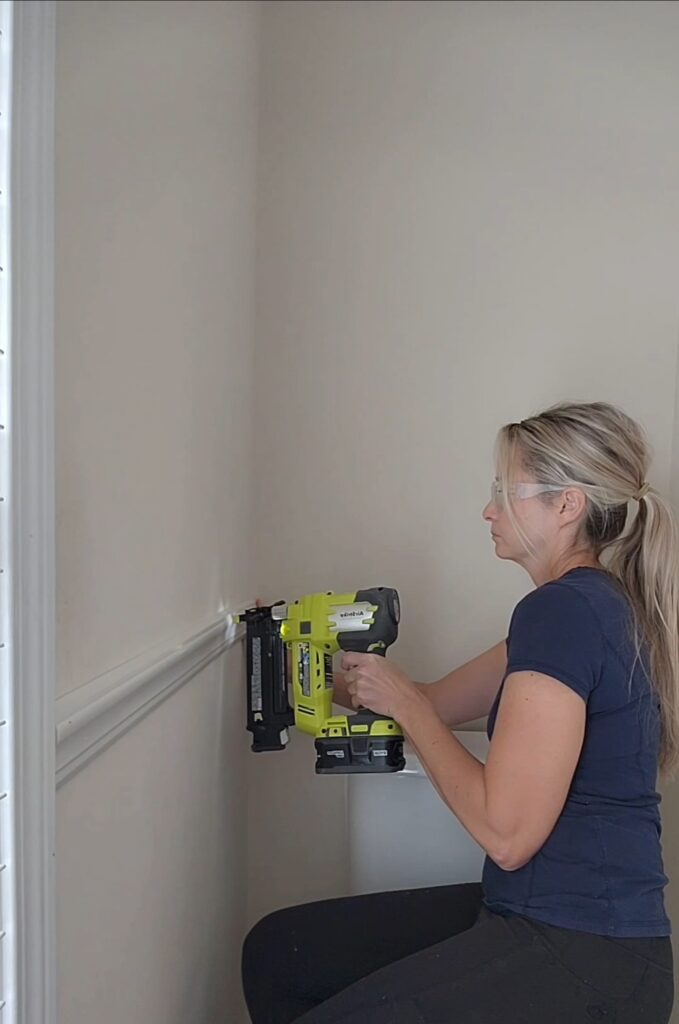
- But if you’re still in the “just getting started” phase, I used a hammer and nails for MONTHS. It’s slower. It’s less convenient. But it worked. Just buy a pack of 16-gauge brad nails for a few bucks and bang away. Just be sure to finish with with a nail punch so the head of the brad sits under the wood, then fill with filler. I also like to show how to add trim with a hammer and nails in my videos from time to time.
- When you DO buy one: consider a cordless brad gun to avoid messing with hoses or compressors. Make sure it has adjustable depth so you don’t blow through thin trim or leave marks.
- Financing tip: This is a “step two” tool once you’ve already bought the drill + saw + jigsaw + multi-tool. No rush.
This is the one I’ve been using for YEARS and it still works great: RYOBI 18-Gauge Airstrike
🧰 Ultimate Tool-Buying Tips (Because I’ve Learned These the Hard Way)
- Stick with one brand for your power-tool batteries. Example: If you pick Brand X and buy their drill, get their miter saw, jigsaw, multi-tool, etc. The alternative is buying each tool with its own battery and charger and spending way more.
- Finance with 0% interest deals when you can. I grab tools during big sale windows (Black Friday, end-of-year, tool-brand rebates) and roll purchases into manageable payments rather than blowing a big chunk of cash up front.
- Buy the biggest size you’ll use (within reason). For example: don’t buy a tiny 8″ miter saw if you’ll ever work with wider boards. But you don’t need a massive industrial 16″ unless you’re a full-time carpenter.
- Look for extendable or modular stands/tables rather than bare saws. Stability + hold-downs + extended wings = easier and safer cuts.
- Quality over quantity early on. Two good tools that get used weekly are better than ten cheap tools sitting in the corner. You’ll build the rest of the kit when you need it.
- Don’t buy just because it’s on sale… buy because you’ll use it. The best deal is worthless if the tool sits unused. I personally don’t purchase as tool unless I need it for a particular project. Before you know it, you’ll have quite the collection over the years.
Wrapping It Up
If you bought these five best first power tools for beginners (in this order) and followed the brand-and-finance strategy above, you’d be significantly ahead of the average homeowner when it comes to getting things done yourself. You’d cut costs, skip delays, and build confidence for bigger projects.
Start with the drill. Then move to the miter saw. Then jigsaw. Then multi-tool. Add the brad gun when your finish-work game ramps up.
Make smart purchases. Stay consistent. Choose one battery ecosystem. Watch for 0% deals. Use the tools. Build your skill. Then the next tool purchase will feel empowering, not overwhelming.
Until then: roll up your sleeves, grab the drill, and watch the difference.
All the best,
Mary Jo (@maryjo.onthego)
You might also like these easy beginner DIY projects that make a huge impact:
Check out how I upgraded my kitchen island here
Check out how I upgraded my TV console here
Check out how I upgraded my carpeted stairs to wood here